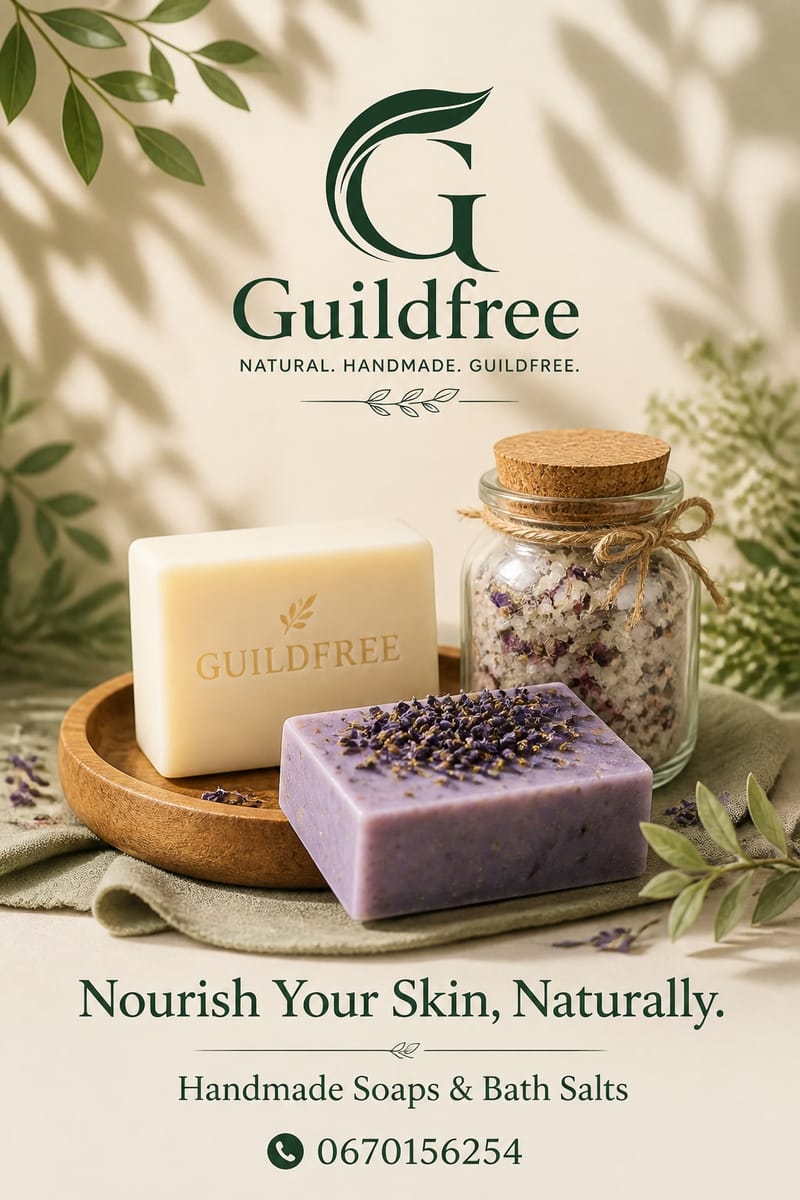
Handmade Soaps & Bath Salts for Your Everyday Ritual


For clear skin, relaxation, energising mornings, and kids who actually love bath time.


Guildfree Store

Guildfree Store

Welcome to the Guildfree Store-your destination for pure, handcrafted skincare. Explore organic soaps, mineral-rich bath salts, and body care products designed to be kind to sensitive skin and made in South Africa with high-quality ingredients.

Shop Now
About Guildfree
At Guildfree, we believe skincare should be as pure as nature intended. That’s why we handcraft every soap, bath salt, and body product using only organic, skin-loving ingredients and pure glycerine. Our products are free from harsh chemicals, synthetic detergents, and unnecessary additives — making them gentle enough for your little ones, yet luxurious enough for you.From acne-fighting charcoal bars to calming bath salts, each creation is made with care, passion, and a promise of quality. Based in South Africa, we’re here to help you treat your skin with the kindness it deserves.Guildfree — Your Purest Choice.
Purely Natural Skincare
Revolutionize your routine with nature's gentleness.


  • Springs, Gauteng, South Africa

Have questions or want to place an order? We’d love to hear from you! 🌿 📱 WhatsApp: 067 015 6254 📧 Email: guildfreehealthandbeauty@gmail.com We’ll get back to you as quickly as possible — your skin (and senses) deserve it! 💚


Are your soaps and bath salts natural?

Yes. All our products are handmade using natural ingredients.

Are your products handmade?

Yes, every product is handmade with care in small batches.

Are your products suitable for children?

Yes. Our products are gentle and suitable for children.

Do you use fragrances or essential oils?

We only use essential oils.

Are your products suitable for sensitive skin?

Yes, our products are gentle and suitable for sensitive skin.

Do you test on animals?

No. We do not test on animals.

What age are your kids products suitable for?

Our kids soaps and Snorkie Bath Salts are suitable for children aged 2 to 10 years.

Do the Snorkie Bath Salts colour the bath water?

No, they do not colour the bath water.

Do the bath salts stain skin or the bath?

No, they do not stain skin or baths.

How often can my child use the kids soaps and Snorkie Bath Salts?

They can be used daily. The products are made using gentle ingredients, essential oils, and Epsom salts.

Are the kids products scented?

Yes, they are lightly scented using essential oils only.

How do I place an order?

All orders are placed via WhatsApp.

What payment methods do you accept?

We accept EFT payments.

Do I need to pay before my order is sent?

Yes, full payment is required before orders are dispatched.

Do you offer delivery?

Yes, we offer nationwide delivery via PUDO.

How much is delivery?

Delivery is R 109 up to 5 kg, charged separately.

Where do you deliver?

We deliver nationwide in South Africa.

How long does delivery take?

Delivery usually takes 3–7 working days.

Do you accept returns?

No, we do not accept returns.

What if my order arrives damaged?

We ensure all products leave our warehouse in good condition. Once an order has left our warehouse, we do not accept responsibility for damage that may occur during transit. Any concerns should be raised directly with the courier.

Do you offer replacements?

Yes, if the damage is found to be our fault. The damaged item must be returned for inspection, and if it is confirmed that the issue was caused by us, the product will be replaced at no extra cost to you.

How long do your soaps last?

With normal use, soaps last 2–4 weeks.

How should products be stored?

Store products in a cool, dry place.

Do your products have an expiry date?

Yes, products are best used within 12 months.

Are your products suitable for gifting?

Yes, our products make beautiful gifts.

Do you offer custom or bulk orders?

Yes, we do offer custom and bulk orders.

Do you sell only online?

Yes, we currently sell online only.

25Aug

Your daily shower can be more than just a routine. Discover how turning ordinary shower time into a calming ritual can help you slow down, reset your mind and create a little more joy in your day.

There is something wonderfully simple about a shower.You step into warm water, wash away the day and step out feeling refreshed. But what if your shower could be more than something you simply rush through?What if you started romanticising it?Romanticising your daily shower does not mean creating an unrealistic, picture-perfect routine. It simply means finding pleasure in ordinary moments and treating everyday self-care as something worth enjoying.In a world where our days can feel rushed, your shower can become a small pause.

Turn Routine Into Ritual

There is a difference between doing something automatically and doing it intentionally.A routine might look like this: get in, wash, rinse, get out.A ritual feels different.You choose a soap you genuinely enjoy. You take a moment to appreciate the warmth of the water. You breathe in the fragrance. You use a soft towel afterwards and moisturise your skin.None of these things needs to take much longer.The difference is your attention.When you intentionally slow down for a few minutes, you give yourself an opportunity to step away from everything else competing for your attention.

Create Your Own Shower Atmosphere

You don't need an expensive bathroom makeover to make your shower feel special.Start with small details.A beautiful soap can make an everyday product feel more luxurious. A favourite fragrance can create a sensory experience. A clean towel waiting afterwards can make the end of your shower feel comforting.You could also keep your bathroom uncluttered and introduce a few simple touches such as a plant, wooden accessories or a small container of bath salts.The goal isn't perfection.The goal is creating an environment where you enjoy being present.

Give Yourself Permission to Slow Down

Many people treat self-care as something they have to earn.They finish everything on their to-do list first. They help everyone else first. They wait until they are completely exhausted.But small moments of self-care don't have to be rewards.They can simply be part of your day.Your shower is one of those opportunities.For a few minutes, you don't have to answer messages, complete a task or think about tomorrow. You can simply be there.That doesn't solve every problem, of course, but it can create a useful transition between one part of your day and another.

Make Your Shower a Morning Reset

A morning shower can become a gentle way to start the day.Instead of immediately reaching for your phone, allow yourself a few quiet minutes.Choose an uplifting fragrance. Let the water wake you up. Think about what you want from the day rather than immediately thinking about everything you need to accomplish.You could even create a simple morning phrase such as:"Today, I don't have to do everything at once."Small reminders like this can help create a calmer mindset.

Or Turn It Into an Evening Reset

Your shower can also become the boundary between your busy day and your evening.Choose a relaxing fragrance and lower the lighting if possible. Put your phone aside. Let the warm water become a signal that the day is winding down.Afterwards, put on comfortable clothes, make a warm drink and allow yourself to transition into rest.The shower becomes more than cleansing.It becomes a signal.Your brain starts recognising that this part of your routine means the busy part of the day is ending.

Enjoy the Little Things

One of the biggest benefits of romanticising ordinary routines is learning to appreciate small pleasures.The fragrance of your soap.The feeling of warm water.A fresh towel.Clean skin.A tidy bathroom.A few quiet minutes.None of these things is extraordinary on its own. Together, however, they can make an ordinary day feel a little more special.And perhaps that's the real beauty of romanticising your shower.You aren't trying to make your life look perfect.You're learning to notice the good things that are already there.

Make It Your Ritual

Your perfect shower doesn't have to look like anyone else's.Maybe you love fresh, clean fragrances. Maybe you prefer floral scents. Perhaps you enjoy something warm and earthy.Choose what makes the experience enjoyable for you.Because self-care isn't always about adding more things to your schedule.Sometimes it's about changing the way you experience something you're already doing.So tomorrow, don't just take a shower.Slow down.Enjoy the fragrance.Take a breath.Use your favourite Guildfree soap.And give yourself permission to turn an ordinary few minutes into something you genuinely look forward to.

18Aug

Self-care does not have to be complicated or time-consuming. Discover how to create a simple, realistic routine that fits into everyday life and helps you make space for yourself.

Self-care often sounds wonderful in theory. We imagine long baths, quiet mornings, candles, skincare rituals and hours of uninterrupted relaxation. But real life does not always work that way.There are busy days, school, work, family responsibilities, unexpected plans and moments when you simply do not have the energy for an elaborate routine.The good news? Self-care does not need to be complicated to make a difference.The best routine is often the one that is simple enough to actually use.

Start Small

One of the biggest mistakes people make when creating a self-care routine is trying to change everything at once.You do not need a two-hour morning routine or a long list of things you have to accomplish every day.Instead, choose one small thing that makes you feel good.It could be taking a few quiet minutes in the morning, enjoying a relaxing bath, using your favourite soap, reading a few pages of a book or simply putting your phone away for a little while.Starting small makes your routine feel achievable rather than overwhelming.

Choose Something You Enjoy

Self-care should not feel like another chore on your to-do list.Think about the simple activities that help you feel relaxed, refreshed or comfortable.Perhaps you enjoy a warm shower at the end of the day. Maybe you like fresh towels, a calming fragrance, soft music or spending a few quiet minutes getting ready for bed.The key is to choose something that you genuinely enjoy.When your routine feels pleasant, you are much more likely to keep doing it.

Attach Self-Care to Something You Already Do

One of the easiest ways to build a habit is to connect it to something that is already part of your day.For example, if you shower every evening, turn those few minutes into a small self-care ritual.Use your favourite bath or body product. Take your time. Put away distractions. Let yourself enjoy the experience instead of rushing through it.You are not necessarily adding another task to your day. You are simply making an ordinary moment feel a little more special.

Create a Simple Evening Reset

Evenings can be a wonderful time for a small self-care ritual.After a busy day, give yourself a few minutes to transition into a calmer mood.You might tidy your bathroom, prepare your clothes for the next day, take a relaxing shower or bath, moisturise your skin and choose something comfortable to wear.It does not need to be perfect.The goal is simply to create a little space between the busyness of the day and the time when you rest.

Make Your Environment Part of the Routine

Your surroundings can influence how a routine feels.You do not need a complete bathroom makeover. Small changes can make a difference.Clear one area of clutter. Fold a clean towel. Put your favourite product somewhere easy to reach. Add a small decorative item or choose a fragrance that makes the space feel pleasant.These little details can turn an everyday bathroom into a space where you actually look forward to spending a few minutes.

Give Yourself Permission to Keep It Flexible

A self-care routine does not have to happen perfectly every single day.Some days will be busy. Some days you will forget. Other days you may simply not feel like doing your usual routine.That is okay.Self-care should support your life, not create another reason to feel guilty.If you miss a day, start again the next day.Consistency does not mean perfection. It means returning to the things that help you feel cared for.

Make It Personal

There is no universal self-care routine that works for everyone.Your routine should fit your personality, your schedule and your needs.Maybe your ideal routine is five quiet minutes with a cup of tea. Maybe it is a relaxing bath once a week. Maybe it is keeping your bathroom organised or taking a few minutes before bed without your phone.There is no right or wrong answer.Ask yourself:What is one small thing that makes me feel cared for?Start there.

Your Self-Care Routine Can Be Simple

Self-care is not about creating a perfect lifestyle. It is about making small moments in everyday life feel a little more intentional.You do not need expensive products, complicated schedules or hours of free time.Start with one small habit.Make it enjoyable. Make it realistic. Connect it to something you already do. And most importantly, give yourself permission to keep it simple.This Sunday, choose one small thing you can start doing for yourself.It could take five minutes.It could happen in your bathroom.It could be as simple as slowing down and enjoying a moment that you normally rush through.Because sometimes, the most meaningful self-care starts with something incredibly small.Your routine does not have to be perfect. It just has to work for you.

14Aug

Discover why simplifying your skincare routine can help you focus on what your skin truly needs, reduce unnecessary product overload, and create a calmer, more intentional approach to everyday skincare.

In skincare, more has often been presented as better. More products, more ingredients, more steps and more complicated routines can make us feel as though we are doing more for our skin. But sometimes, the opposite is true. Minimalist skincare is about simplifying your routine and being intentional about what you use. Instead of filling your bathroom shelf with countless products, the focus shifts to choosing a few quality products that support your skin and fit naturally into your lifestyle. For many people, skincare doesn't need to be complicated to be effective.

What Is Minimalist Skincare?

Minimalist skincare means reducing your routine to the essentials while paying attention to what your skin actually needs.A simple routine may include a gentle cleanser, a moisturising product and sun protection during the day. Depending on your individual skin needs, you may choose to add one targeted product rather than layering several products at once.The goal isn't to use as little as possible simply for the sake of minimalism. It's about using the right products for your skin without unnecessary complexity.

Why Can Simpler Be Better?

One of the biggest advantages of a simpler routine is that it becomes easier to understand what works for you.When you introduce several new products at the same time, it can be difficult to know which product is helping—or which one may be causing irritation. A streamlined routine makes it easier to notice how your skin responds to individual products.It can also make skincare more enjoyable.Instead of spending a long time moving from one product to another, you can turn your routine into a few calming moments during the morning and evening. Skincare becomes less of a chore and more of a small act of self-care.

Don't Forget Your Skin Barrier

Your skin has a natural protective barrier that helps keep moisture in and protects the skin from external irritants.Using too many strong or active products, particularly when they are unnecessary for your skin, can sometimes leave your skin feeling uncomfortable, dry or irritated.A minimalist approach encourages you to think about supporting your skin rather than constantly trying to change it.Gentle cleansing, moisturising and consistent sun protection can form the foundation of a routine that respects your skin's natural needs.

Quality Over Quantity

Minimalism doesn't mean choosing the cheapest product or avoiding skincare altogether.Instead, it encourages quality over quantity.Before adding something new to your bathroom shelf, ask yourself:Do I really need this product?What is it designed to do?Does it fit into my existing routine?Is it suitable for my skin?Am I adding it because my skin needs it—or because I simply saw it trending? These simple questions can help prevent your skincare collection from becoming overwhelming.

Natural Skincare Can Fit Beautifully Into a Minimalist Routine

For those who enjoy handmade and naturally inspired skincare, minimalist routines can be a wonderful way to appreciate individual products.A thoughtfully formulated soap or body product can become part of a simple daily ritual rather than one of dozens of products competing for attention.At Guildfree, the philosophy of handmade skincare is about creating products that can bring a little more intention and enjoyment to everyday self-care.From cleansing rituals to relaxing bath moments, the experience doesn't have to be complicated to feel special.

Listen to Your Skin

One of the most important parts of minimalist skincare is learning to pay attention to your skin.Your skin can change with the seasons, weather, lifestyle and other factors. A routine that worked perfectly at one point may need to be adjusted later.Instead of constantly chasing the newest skincare trend, take a moment to notice what your skin is telling you.Does it feel comfortable? Does it feel moisturised? Is your routine causing unnecessary irritation? Are you using products simply because everyone else is?Your skincare routine should work with your skin, not against it.

A More Intentional Approach

Minimalist skincare is ultimately about making thoughtful choices.It is about stepping away from the idea that a complicated routine automatically means better skincare. Sometimes, a few carefully chosen products, used consistently, can create a much more manageable and enjoyable ritual.So before buying another product for your bathroom shelf, pause and ask yourself whether your skin truly needs it.Less doesn't mean doing less for your skin. It can mean choosing more intentionally.And sometimes, the simplest routine is the one you are most likely to enjoy, maintain and make part of your everyday life.

Guildfree Tip

Start by looking at your current skincare shelf. Choose the products you genuinely use and need, and consider simplifying everything else. Introduce new products slowly rather than changing your entire routine at once.Your skin doesn't need a complicated schedule.It deserves thoughtful care.

06Aug

Your skincare routine shouldn't stop at your jawline. Discover how "skin cycling" can transform the skin on your entire body, helping reduce dryness, irritation, and dullness while making your favourite body care products work even better.

If you've spent any time on social media lately, you've probably heard the term skin cycling. Most people think it's something reserved for facial skincare—a carefully planned rotation of exfoliation, hydration, and recovery days designed to keep skin healthy without overloading it.But here's something many people overlook:The skin on your body benefits from skin cycling just as much as the skin on your face.In fact, because our bodies experience daily friction, hot showers, shaving, weather changes, and harsh cleansers, body skin often needs an even gentler, more intentional routine.The good news?You don't need an expensive collection of products or a complicated schedule. A simple rhythm of cleansing, nourishing, and allowing your skin time to recover can make an incredible difference.

What Exactly Is Skin Cycling?

Skin cycling is simply giving your skin what it needs instead of using every product every single day.Rather than constantly exfoliating or applying strong ingredients, you alternate between treatments and recovery days. This helps protect your skin barrier while allowing active ingredients to do their job effectively.Think of it this way: your skin is constantly repairing itself. When we overload it with too many products, excessive scrubbing, or harsh cleansers, we interrupt that natural process.Sometimes, healthy skin isn't about doing more—it's about doing less, but doing it consistently.

Your Body Has Different Needs Than Your Face

The skin on your arms, legs, back, and shoulders is thicker than facial skin, but that doesn't mean it's indestructible.Daily habits can slowly strip away your skin's natural oils:Long, hot showersFrequent shavingDry winter airSwimming in chlorinated poolsTight clothingStrong soapsConstant washing Over time, this can leave skin feeling rough, itchy, flaky, or dull.A gentle body care routine helps restore balance instead of constantly fighting against your skin.

A Simple Body Skin Cycling Routine

Day 1: Gentle Exfoliation

Remove dead skin cells using a soft exfoliating cloth or a gentle body scrub.This allows fresh skin to shine through and helps moisturisers absorb more effectively.Avoid scrubbing aggressively—healthy skin never needs to be "scrubbed raw."

Day 2: Deep Nourishment

Use a gentle handmade soap that cleanses without stripping natural oils.After bathing, apply a rich moisturiser or body butter while your skin is still slightly damp to lock in hydration.

Day 3: Recovery

This is where many people make the biggest mistake.Recovery doesn't mean skipping skincare entirely.Instead, choose the gentlest products possible. Let your skin rest while maintaining moisture and avoiding unnecessary exfoliation.

Repeat

Continue the cycle, adjusting it based on how your skin feels rather than following strict rules.Your skin is unique, and learning to listen to it is one of the best forms of self-care.

Why Handmade Soap Fits Perfectly Into Skin Cycling

One of the biggest challenges with body care is using cleansers that remove more than just dirt.Many commercial soaps can leave skin feeling tight immediately after washing—a sign that the skin barrier may be losing valuable moisture.Quality handmade soaps are often crafted to cleanse gently while helping the skin feel comfortable rather than stripped.When paired with thoughtful skin cycling, they become part of a routine that supports healthy-looking skin instead of constantly forcing it to recover.The goal isn't squeaky-clean skin.The goal is balanced, comfortable skin.

Listen to What Your Skin Is Telling You

Healthy skin isn't always perfectly smooth or flawless.Sometimes it feels drier during winter.Sometimes it needs extra hydration after spending time in the sun.Sometimes it simply needs a break.Learning to notice these changes—and adjusting your routine accordingly—is one of the simplest ways to care for yourself.Self-care isn't about perfection.It's about paying attention.

Small Habits Create Lasting Results

Beautiful skin rarely comes from one miracle product.It usually comes from small daily habits repeated over time.Choosing gentle cleansers. Moisturising consistently.Avoiding over-exfoliation.Giving your skin time to recover.These simple choices add up.So the next time you hear someone talking about skin cycling, remember this:It isn't just for your face.Your arms, legs, shoulders, hands, and entire body deserve the same thoughtful care.Because when your skin feels healthy, comfortable, and nourished, you don't just see the difference—you feel it every single day.

30Jul

The Everything Shower has taken social media by storm, promising the ultimate self-care ritual. But is spending extra time in the shower actually good for your skin? Discover the benefits, the hidden downsides, and how to create a luxurious shower routine that leaves your skin healthy, soft, and glowing.

If you've spent any time on TikTok, Instagram, or Pinterest recently, you've probably seen people talking about the Everything Shower. Videos show beautifully arranged products, fluffy towels, candles, soothing music, and a shower routine that seems to last forever. For many, it has become the ultimate symbol of self-care.But beneath the aesthetic videos lies an important question:Is the Everything Shower actually good for your skin—or is it just another social media trend?The answer might surprise you.

What Exactly Is an Everything Shower?

Unlike your everyday quick shower, an Everything Shower is an extended self-care ritual where you complete all your beauty and body care steps in one session.A typical Everything Shower might include:Washing your hairApplying a deep-conditioning treatmentExfoliating your bodyShavingCleansing your faceUsing a nourishing body soapApplying a hair maskMoisturising from head to toeFinishing with body oils or perfume Rather than rushing through your routine, it's about slowing down and giving yourself dedicated time to relax.For many people, it's less about getting clean and more about resetting both physically and mentally.

Why Has It Become So Popular?

Modern life is busy.Between work, family responsibilities, endless notifications, and daily stress, many people struggle to find time for themselves.The Everything Shower offers permission to pause.It transforms an ordinary daily task into something luxurious and calming.Social media has also played a huge role. Beautiful bathrooms, elegant product displays, candles, and relaxing music create an experience people naturally want to recreate.It's no longer just hygiene.It's wellness.

The Benefits of an Everything Shower

When done properly, an Everything Shower can genuinely benefit your wellbeing.

It Reduces Stress

Warm water naturally helps relax muscles while encouraging your body to slow down.Adding calming scents like lavender, chamomile, or eucalyptus creates a spa-like atmosphere that encourages relaxation after a long day.

It Encourages Better Skincare

When you're not rushing, you're more likely to:Cleanse thoroughlyRemove dead skin gentlyMoisturise properlyNotice dry areas before they become a problem Consistency is often more valuable than expensive products.

It Creates Healthy Habits

Many people schedule an Everything Shower once or twice a week.Having a dedicated self-care routine makes it easier to maintain healthy skin without feeling overwhelmed.

But Can It Be Too Much?

Here's where dermatologists offer an important reminder.Long, hot showers can actually work against healthy skin.Hot water strips away the skin's natural oils that protect against dryness and irritation.If you're exfoliating aggressively, shaving, and using harsh cleansers all in one session, your skin barrier may become damaged.Signs of overdoing it include:Tight skinRednessItchingFlakingIncreased sensitivity The goal isn't to do more.It's to care for your skin more thoughtfully.

The Secret Is Gentle Products

One of the biggest mistakes people make is assuming more products equal better results.Healthy skin usually responds best to simple, nourishing ingredients.Look for products containing:Shea butterCocoa butterGlycerinOat extractsAloe veraPlant oils These ingredients help maintain moisture instead of stripping it away.Choosing a handmade soap crafted with skin-loving oils can leave your skin feeling clean while supporting its natural moisture balance.Instead of that "squeaky clean" feeling—which often means your skin has been stripped—you should aim for skin that feels soft, comfortable, and hydrated.

Create a Better Everything Shower

If you want to enjoy the trend without damaging your skin, keep your routine balanced.A healthy Everything Shower might look like this:Start with warm—not hot—water.Cleanse your skin using a gentle handmade soap.Exfoliate only once a week using a soft scrub or exfoliating cloth.If shaving, use a moisturising shaving product to reduce irritation.Finish your shower within about 10–15 minutes rather than standing under hot water for half an hour.Within a few minutes of drying off, apply a rich moisturiser or body butter to lock in hydration.This approach gives you all the relaxing benefits while protecting your skin.

Make It an Experience

The Everything Shower isn't just about products.It's about creating a peaceful ritual.You can elevate the experience by:Lighting a candlePlaying calming musicUsing fluffy towelsPreparing a warm cup of herbal tea afterwardsSwitching off your phone for a while These small touches can make even an ordinary evening feel special.Self-care doesn't have to be expensive.Sometimes it's simply giving yourself permission to slow down.

Where Guildfree Fits In

At Guildfree, we believe luxury starts with caring for your skin naturally.Our handmade soaps are crafted in small batches using carefully selected ingredients that cleanse gently while helping your skin feel nourished and refreshed.Whether you're enjoying a full Everything Shower or simply taking five quiet minutes at the end of a busy day, choosing products that respect your skin makes all the difference.Luxury isn't about having dozens of products.It's about using products that genuinely care for your skin.

Final Thoughts

The Everything Shower trend has earned its popularity because it encourages something many of us desperately need: slowing down.The ritual can improve your mood, encourage consistent skincare, and turn an everyday routine into a moment of calm.However, more isn't always better.Long, hot showers and excessive exfoliation can leave your skin dry and irritated. The best Everything Shower focuses on gentle cleansing, nourishing ingredients, and mindful self-care rather than endless products.At the end of the day, healthy skin isn't created by following every trend on social media. It's built through consistent care, quality ingredients, and taking time to listen to what your skin truly needs.So the next time you plan an Everything Shower, remember that the goal isn't perfection—it's balance. Treat your skin kindly, choose nourishing products, and enjoy the ritual. Your body and mind will thank you for it.

23Jul

Discover why skin barrier repair has become one of the biggest skincare trends. Learn what your skin barrier does, how it gets damaged, the warning signs to watch for, and simple ways to restore healthy, glowing skin naturally.

If you've spent even a few minutes on social media lately, you've probably seen people talking about skin barrier repair. Beauty influencers, dermatologists, skincare enthusiasts, and even celebrities are all sharing tips on protecting this often-overlooked part of our skin.But what exactly is the skin barrier, and why has it suddenly become such a hot topic?The answer is surprisingly simple: many of us have been unknowingly damaging our skin through harsh cleansers, over-exfoliation, excessive active ingredients, and environmental stress. The result is skin that feels dry, irritated, sensitive, and impossible to keep healthy.The good news? Your skin barrier can recover with the right care.

What Is Your Skin Barrier?

Think of your skin barrier as your body's natural shield. It is the outermost layer of your skin that works tirelessly every single day to protect you from harmful bacteria, pollution, allergens, and moisture loss.A healthy skin barrier keeps hydration locked in while preventing irritants from getting inside. When it's functioning properly, your skin feels soft, smooth, comfortable, and balanced.When it becomes damaged, however, everything changes.

Signs Your Skin Barrier May Be Damaged

Many people assume they have sensitive skin when, in reality, they have a damaged skin barrier.Some common warning signs include:Dry or flaky patchesTightness after washingRedness that won't disappearBurning or stinging when applying skincareIncreased breakoutsRough textureSkin that feels both oily and dryProducts that suddenly start irritating your skin If several of these sound familiar, your skin barrier could be asking for help.

What Causes Skin Barrier Damage?

Modern skincare routines often encourage us to use more products than our skin actually needs.Some of the biggest causes include:

Over-cleansing

Washing your face too often can strip away your skin's natural oils. Those oils aren't the enemy—they're essential for maintaining a healthy barrier.

Over-exfoliating

Exfoliation helps remove dead skin cells, but too much can wear away the protective layer your skin depends on.

Too Many Active Ingredients

Vitamin C, retinol, glycolic acid, salicylic acid, and other active ingredients can produce amazing results when used correctly. Layering several of them together, however, can overwhelm your skin.

Harsh Soaps and Cleansers

Products containing strong detergents may leave your skin feeling "squeaky clean," but that tight feeling is often a sign that your natural protective oils have been removed.

Environmental Stress

Sun exposure, cold weather, wind, pollution, air conditioning, and indoor heating can all weaken the skin barrier over time.

Why Skin Barrier Repair Matters

Healthy skin isn't about chasing perfection.It's about helping your skin perform its natural job.When your barrier is healthy, you may notice:Better hydrationFewer breakoutsLess rednessReduced sensitivityA smoother textureA brighter complexionMakeup that applies more evenlySkin that feels comfortable throughout the day Instead of constantly treating problems, you're supporting your skin before issues develop.

How to Repair Your Skin Barrier

The first step is surprisingly refreshing: do less.Your skin doesn't always need a complicated ten-step routine.

Choose a Gentle Cleanser

Look for cleansers that remove dirt without stripping away natural moisture. Gentle cleansing helps preserve your skin's protective oils.

Moisturise Consistently

A good moisturiser helps replenish hydration while supporting your skin's natural repair process.

Reduce Exfoliation

If you've been exfoliating several times a week, consider cutting back while your skin recovers.

Protect Your Skin from the Sun

Daily sun protection helps prevent further damage and gives your skin the opportunity to heal.

Keep Your Routine Simple

When repairing your barrier, less is often more. Focus on cleansing, moisturising, and protecting your skin rather than introducing multiple new products.

Can Handmade Soap Support Healthy Skin?

Not all soaps are created equally.Traditional handmade soaps made with nourishing oils and skin-loving ingredients can provide a gentler cleansing experience than many harsh commercial cleansers.Quality handmade soaps often contain naturally occurring glycerin, a humectant that helps attract moisture to the skin. Combined with carefully selected botanical ingredients, these soaps can cleanse without leaving your skin feeling excessively dry.Choosing products made in small batches with thoughtful formulations may help support a healthy skincare routine, especially when paired with proper moisturising.

Patience Is Part of the Process

One reason skin barrier repair has become so popular is that people are discovering something important: healthy skin takes time.You won't usually repair a damaged barrier overnight. Depending on the extent of the damage, it may take several weeks of consistent care before you notice significant improvements.The key is consistency rather than constantly switching products.

The Bottom Line

The excitement around skin barrier repair isn't just another passing skincare trend.

It's a reminder that healthy skin starts with protecting what your body has already built.Instead of aggressively trying to fix every small imperfection, modern skincare is moving toward supporting the skin's natural ability to heal, defend itself, and stay balanced.

Sometimes the most effective skincare routine isn't about adding more products—it's about choosing gentler ones, simplifying your routine, and giving your skin the care it truly needs.If your skin has been feeling irritated, dry, or unusually sensitive, it may be time to focus less on chasing the latest miracle ingredient and more on rebuilding your skin's natural barrier.

At Guildfree, we believe skincare should work with your skin, not against it. Our handmade soaps are thoughtfully crafted in small batches using carefully selected ingredients to cleanse gently while supporting healthy-looking skin. Because true luxury isn't about harsh treatments—it's about giving your skin the gentle care it deserves.Healthy skin begins with a healthy barrier, and sometimes the simplest changes make the biggest difference.

18Jun

Many everyday soaps contain strong cleansing agents and synthetic ingredients that may leave skin feeling dry or irritated. Understanding what goes into skincare products can help consumers make healthier choices for their skin.

Most people use soap every single day without thinking much about what is actually inside it. If the product smells pleasant and creates enough foam, it often feels trustworthy automatically. 

However, many commercial soaps contain ingredients that can be surprisingly harsh on the skin, especially with repeated daily use. One of the biggest misconceptions in skincare is the belief that stronger cleansing always means cleaner skin. In reality, overly harsh products can damage the skin’s natural protective barrier and lead to dryness, irritation, and discomfort. 

The skin naturally produces oils that help maintain moisture and protect against environmental stress. When strong cleansing agents strip away too much of this protection, the skin may become sensitive and unbalanced. 

This is why some people experience tightness, itchiness, or dryness immediately after washing. Many mass-produced soaps are designed for long shelf life, high foam production, and strong fragrance rather than skin nourishment. While these features may feel appealing at first, they are not always ideal for sensitive or dry skin types. 

Artificial fragrances are one ingredient category that can sometimes cause irritation for certain people. Strong synthetic scents may trigger sensitivity, especially for individuals with already reactive skin. Another issue is excessive cleansing. Some soaps remove dirt effectively but also remove too much natural moisture at the same time. This can leave skin feeling uncomfortable and dry after repeated use. 

Gentler soaps often approach skincare differently. Instead of focusing only on aggressive cleansing, they aim to support the skin’s natural balance while still cleaning effectively. Ingredients like oats, shea butter, olive oil, coconut oil, aloe, and botanical extracts are commonly used in handmade soaps because they help create a softer cleansing experience. People with sensitive skin are especially becoming more aware of ingredient quality.

 Many consumers now actively search for products labeled: gentle natural fragrance-free sulfate-free sensitive skin friendly This growing awareness is changing the skincare industry quickly. Consumers today are far more educated than before.

 Social media, skincare creators, and online wellness communities have encouraged people to question ingredient lists and understand how products affect the skin long term. There is also growing interest in minimal skincare routines. Instead of using many aggressive products at once, people are simplifying routines and choosing fewer but gentler products.

 This shift reflects a broader movement toward wellness and mindful living. People are becoming more intentional about daily habits, including the products they use on their bodies. Interestingly, many consumers now associate skincare with emotional wellness too. 

Products that feel calming, soft, and comforting create positive emotional experiences beyond physical results alone. That emotional connection is one reason handmade skincare brands continue growing. They often feel more personal, authentic, and trustworthy compared to heavily commercialized products. Eco-consciousness is another important factor. Consumers increasingly prefer products with environmentally friendly packaging and more sustainable ingredient choices. As skincare awareness continues growing in South Africa, more people will likely begin prioritizing ingredient quality over excessive fragrance and foam. 

Healthy skin often responds best to consistency, gentleness, and balance rather than harsh treatments. Understanding skincare ingredients does not mean people need to fear every commercial product. Instead, it encourages more informed decisions based on personal skin needs and comfort. The future of skincare is likely moving toward simpler routines, gentler ingredients, and products designed to support overall wellbeing instead of only surface-level beauty. 

Sometimes healthier skin starts with something very simple — choosing products that treat the skin with a little more kindness.

09Jun

Children’s skin is more delicate than adult skin, which means harsh soaps can easily cause dryness and irritation. Choosing gentle skincare products can help protect young skin while making bath time more comfortable and enjoyable.

Many parents do not realize how sensitive children’s skin can be until dryness, irritation, or redness starts appearing after bath time. 

Young skin is naturally thinner and more delicate than adult skin. Because of this, children can react more easily to harsh ingredients, strong fragrances, and overly drying soaps. Bath time should leave skin feeling soft and comfortable, not tight or irritated. 

Unfortunately, many commercial bath products focus heavily on fragrance, bright colors, and foam instead of skin comfort. While bubbles may look fun, some ingredients used to create excessive foam can dry out sensitive skin over time. This is one reason many parents are starting to switch to gentler bath products and handmade soaps designed specifically for delicate skin.

 Gentle soaps usually contain simpler ingredients and more nourishing oils that help support the skin’s natural moisture barrier. Ingredients like oats, shea butter, coconut oil, aloe, and mild botanical blends are becoming increasingly popular among parents looking for safer skincare options.

 Children’s skin loses moisture more quickly than adult skin. When harsh soaps strip away natural oils, dryness and discomfort can develop easily. Some children may experience itching, flaky patches, or sensitivity after frequent exposure to overly strong bath products. A gentle skincare routine helps reduce this risk while keeping bath time comfortable and calming. 

Another important factor is fragrance. Strong artificial fragrances can sometimes irritate sensitive skin, especially in young children. Softer, milder scents are often better choices for everyday use. Parents are also becoming more aware of how emotional bath time can be. A calm, enjoyable bath routine helps children relax and feel safe before bedtime. Warm water, gentle products, and soft routines create comforting daily rituals that support emotional wellbeing as well. Bath time is often one of the few quiet moments families share during busy days.

 Turning it into a peaceful experience can strengthen routines and reduce bedtime stress. Many handmade kids soaps now combine gentle ingredients with playful designs that make bath time more enjoyable for children. Animal-shaped soaps, colorful but mild bath salts, and fun sensory experiences help children engage positively with hygiene routines. 

This is especially helpful for younger children who resist bath time or become anxious around evening routines. Parents today are also paying closer attention to ingredient transparency. They want to understand what is being used on their children’s skin and prefer products with simpler ingredient lists. Natural skincare products often create a stronger sense of trust because they feel more honest and less chemically overwhelming. 

Eco-friendly packaging is another growing factor influencing buying decisions. Many families want products that are not only gentle on skin but also kinder to the environment. Social media has played a major role in educating parents about skincare awareness. Videos discussing sensitive skin, dry skin, and ingredient safety have encouraged more families to explore gentler alternatives. 

As awareness grows, the demand for children’s skincare products that combine safety, comfort, and fun will likely continue increasing. The future of kids skincare is moving toward products that support both physical comfort and emotional wellbeing. Parents want products that feel soft, trustworthy, and enjoyable to use. Simple routines often create the strongest memories for children. 

A warm bath, a calming soap, and a peaceful bedtime routine may seem small, but these moments can become comforting parts of childhood. 

Choosing gentle soap is not only about skincare. It is about creating safe, calm, and caring experiences for growing children every day.

04Jun

Bath time is no longer just about getting clean. More people are turning simple bath routines into calming self-care rituals that help reduce stress, improve sleep, and create moments of peace during busy days.

Modern life has become incredibly busy. Between work, parenting, financial pressure, social media, and constant notifications, many people feel mentally exhausted before the day even ends. That is one reason self-care routines have become increasingly important. People are searching for simple ways to slow down, relax, and reconnect with themselves. 

Surprisingly, one of the most powerful tools for this has become something very simple — bath time. For many people, baths are no longer only about hygiene. They are becoming emotional reset moments. A warm bath creates a rare opportunity to step away from screens, noise, and pressure. It becomes a quiet space where the body and mind can relax at the same time. 

This shift is one reason bath salts have become so popular in recent years. Products designed for stress relief, relaxation, and sleep support are growing quickly because consumers are looking for more than skincare. They want emotional comfort. Ingredients like lavender, eucalyptus, chamomile, magnesium salts, and floral blends are especially popular because they create calming sensory experiences. Scent plays a powerful role in helping the body feel safe and relaxed.

 Many people now create small rituals around bath time. Candles, soft lighting, calming music, herbal tea, and relaxing bath products all contribute to a feeling of peace and comfort. These routines may seem simple, but they can have a meaningful emotional impact. Warm water naturally helps muscles relax. The quiet environment reduces stimulation. Calming scents encourage slower breathing and mental stillness. 

Together, these small elements help create emotional balance after stressful days. Another reason bath rituals are growing is because people are becoming more aware of burnout. Constant stress affects sleep, energy levels, mood, and even skin health. Small self-care practices help create moments of recovery during overwhelming schedules. Interestingly, people are also moving away from the idea that self-care needs to be expensive. Social media once promoted luxury spa experiences that felt unrealistic for many households. 

Today, people are embracing affordable comfort instead. A peaceful bath at home can feel just as restorative as an expensive spa treatment when the environment feels calming and intentional. This is especially important in South Africa where many people face demanding work schedules, economic pressure, and daily stress. Affordable wellness routines are becoming more valuable because they offer emotional relief without major expense. Bath salts fit perfectly into this trend because they transform ordinary bath time into something more meaningful. Instead of rushing through routines, people are learning to slow down and create moments of calm. 

Parents are also starting to use calming bath routines for children. Warm baths before bedtime can help kids relax, sleep better, and transition peacefully into nighttime routines. This emotional aspect of bath care is becoming increasingly important. Consumers no longer buy products only for physical results. They buy products based on how those products make them feel. 

A calming bath product may represent rest, peace, comfort, quietness, or emotional recovery. That emotional connection is what makes wellness products so powerful today. Visual presentation also plays a role. Beautiful jars, soft colors, natural ingredients, and minimal packaging contribute to the overall experience. Consumers enjoy products that feel aesthetically calming and emotionally comforting. Social media has helped accelerate this trend dramatically. Videos showing relaxing bath setups, pouring bath salts, steaming water, and soft self-care routines receive massive engagement online because they emotionally resonate with exhausted audiences. People are craving softness in a world that often feels overwhelming. Bath rituals offer something simple but powerful — permission to pause. As wellness culture continues growing, bath products will likely become even more connected to emotional wellbeing, stress relief, and healthy lifestyle routines. T

he future of self-care may not be about luxury at all. It may simply be about creating small peaceful moments that help people feel human again.

04Jun

Many South Africans are becoming more careful about what they put on their skin. Handmade soaps are growing in popularity because they offer gentler ingredients, natural oils, and a more skin-friendly approach to daily skincare.

For years, most people bought soap without thinking twice about what was actually inside it. If it smelled good and made enough foam, it was considered good enough. But that mindset is changing quickly across South Africa. More people are starting to read ingredient labels. They are becoming aware of how harsh some commercial soaps can be, especially for sensitive or dry skin. This growing awareness is one of the biggest reasons handmade soap has become so popular. Unlike many mass-produced soaps, handmade soaps are often made with simpler ingredients and natural oils that help support the skin instead of stripping it dry. 

Ingredients like shea butter, oats, coconut oil, olive oil, rooibos, and essential oils are becoming increasingly attractive to consumers who want gentler skincare products. Many commercial soaps contain strong detergents and synthetic fragrances that can leave skin feeling tight, itchy, or irritated after washing. People with sensitive skin often notice this the most. 

Dry patches, redness, and discomfort can become part of everyday life without realizing the products being used may be contributing to the problem. 

Handmade soap offers a different experience. Instead of focusing only on strong fragrance and excessive foam, many artisanal soaps focus on nourishment and skin comfort. The goal becomes caring for the skin rather than simply cleaning it. Another reason South Africans are making the switch is the rise of wellness culture. Self-care is no longer viewed as something extra or unnecessary. 

People are paying more attention to small daily routines that help them feel calmer, healthier, and more balanced. Simple routines like taking a warm bath, using calming soaps, or creating a peaceful evening routine are becoming important ways people manage stress. Handmade skincare fits naturally into that lifestyle because it feels slower, softer, and more intentional. There is also growing support for local businesses and small brands. Consumers enjoy knowing where their products come from and who makes them. 

Handmade soap often carries a personal story behind it. That authenticity creates trust. People are also becoming more aware of environmental concerns. Eco-friendly packaging, smaller production batches, and reduced plastic use are influencing buying decisions. Handmade soap brands often appeal to environmentally conscious consumers because they tend to use more sustainable packaging and less waste. Another interesting shift happening in the market is the move toward premium simplicity. 

Consumers no longer associate luxury only with expensive designer brands. Today, many people see luxury as quality ingredients, beautiful presentation, and products that make them feel cared for. Minimal packaging, natural colors, and clean branding are becoming increasingly popular in the skincare world. Handmade soap fits perfectly into this trend because it feels personal and thoughtfully created. Social media has also played a major role in the growth of handmade skincare products. 

Platforms like TikTok, Instagram, and Facebook have made it easier for people to discover small artisanal brands. Videos showing soap cutting, pouring, packaging, and ingredient preparation attract millions of views because people enjoy visually satisfying and calming content. Consumers are not only buying products anymore. 

They are buying experiences, stories, and emotions. A handmade soap bar can represent relaxation, comfort, self-care, or healthier living.

 In South Africa specifically, there is also growing interest in natural African ingredients. 

Rooibos, marula oil, aloe, and other botanical ingredients are helping local skincare brands stand out. Customers enjoy products that feel connected to local culture and natural wellness traditions. Sensitive skin awareness is another major factor driving growth. Parents are becoming more careful about the products they use on children. Adults dealing with dry or reactive skin are also searching for gentler alternatives to harsh commercial products.

 Handmade soaps designed for sensitive skin, kids, or fragrance-free routines are becoming increasingly valuable in the market. Consumers want products that feel safe, calm, and trustworthy. The future of skincare is likely moving toward simplicity, transparency, and emotional wellness. People want fewer harsh ingredients and more products that genuinely support their skin and overall wellbeing. Handmade soap represents more than a trend.

 For many people, it represents a shift toward healthier living, mindful self-care, and choosing products with intention. 

As more South Africans continue exploring natural skincare, handmade soap brands that focus on quality, honesty, and emotional connection will likely continue growing strongly in the years ahead.

19May

Switching skincare products too often can confuse your skin and delay real results. Skin needs time to adjust, repair, and respond properly to a routine. Consistency helps strengthen the skin barrier, improve balance, and reveal real long-term results. ⏳ Skin needs time to adjust 🔄 Constant change disrupts results 🌿 Consistency builds healthy skin

Switching skincare products too often can confuse your skin and delay real results. Healthy skin is built through patience, routine, and consistency — not by constantly chasing the next trending product. 

Giving your skin time to adjust allows your barrier to strengthen, balance to improve, and long-term results to finally show.

When people start a skincare journey, one of the biggest mistakes they make is changing products too quickly. A cleanser doesn’t work after three days? Replace it. A serum doesn’t magically clear breakouts in a week? Buy something new. Social media constantly pushes “instant glow” promises, making it easy to believe your skin should transform overnight.

But real skincare doesn’t work that way.Your skin needs consistency far more than constant change.

Every time you introduce a new product, your skin has to adjust. Ingredients interact differently depending on your skin type, environment, stress levels, hormones, hydration, and even sleep patterns. Constantly switching products interrupts your skin’s ability to adapt and repair properly. Instead of helping, frequent changes often lead to irritation, breakouts, dryness, sensitivity, or confusion about what is actually working.

One of the most important parts of skincare is protecting your skin barrier. Your skin barrier is the outer layer responsible for keeping moisture in and irritation out. When your routine changes too often, especially with active ingredients like acids, retinol, or exfoliants, that barrier can become weakened. Once that happens, skin may suddenly feel tight, inflamed, oily, flaky, or more reactive than usual.This is why consistency matters.

A simple routine done consistently will almost always outperform an overly complicated routine that changes every week.

Healthy skin is built slowly. Most skincare products need at least four to eight weeks before noticeable improvements happen. Some concerns, like acne marks, uneven texture, or barrier repair, may take even longer. That timeline can feel frustrating in a world obsessed with fast results, but skin health is a long-term investment, not a quick fix.

Think about it this way: if you keep digging up a plant every few days to check if the roots are growing, the plant never gets a chance to grow properly. Your skin works similarly. It needs stability, repetition, and time.

Consistency also allows you to truly understand your skin. When you constantly switch products, it becomes difficult to identify what is helping and what is causing problems. A stable routine gives you clear feedback. You begin noticing how your skin reacts to certain ingredients, weather changes, hydration levels, or stress. That understanding is what helps build an effective long-term routine.

Another reason people struggle with consistency is trend culture. Social media constantly introduces “must-have” products, viral routines, and miracle ingredients. While some products may genuinely be helpful, constantly chasing trends can lead to skincare overload. More products do not automatically mean better skin.In many cases, less is more.

A gentle cleanser, moisturizer, sunscreen, and one or two targeted treatments are often enough to create healthy, balanced skin. The real magic happens when those basics are used consistently over time.It’s also important to understand that skincare results are not always dramatic overnight transformations. Sometimes progress looks smaller than expected at first. Skin may become calmer, less irritated, more balanced, or more hydrated before major visible changes appear. Those small improvements are signs that your skin barrier is recovering and strengthening.

Patience is part of the process.

People often quit routines right before results would have started showing. They assume a product “isn’t working” when in reality their skin simply hasn’t had enough time to respond yet. Of course, if a product causes severe irritation, allergic reactions, or worsening skin issues, it should be stopped. But outside of those situations, consistency is usually the missing ingredient.

Lifestyle habits also play a huge role in skincare consistency. Hydration, sleep, stress management, nutrition, and sun protection all affect your skin’s ability to heal and function properly. Even the best skincare products cannot fully compensate for chronic dehydration, poor sleep, or excessive sun exposure.

That’s why healthy skin is rarely about perfection. It’s about steady care repeated over time.

Your skincare routine does not need to be expensive, trendy, or complicated to work. It simply needs to support your skin consistently and gently enough for your skin to do what it naturally wants to do: repair, protect, and renew itself.The truth is, skin thrives on stability.

So before buying another viral product or changing your entire routine again, ask yourself whether your skin truly needs something new — or whether it simply needs more time.

Sometimes the biggest skincare glow-up comes from finally staying consistent long enough to let your skin breathe, heal, and respond naturally.

13May

Stress can quietly affect your skin, leading to breakouts, sensitivity, and imbalance.

Stress does not only live in your mind. It shows up in your skin too.

 When your body experiences stress, it produces a hormone called cortisol. 

This hormone is part of your natural survival system, but when levels stay high for too long, it begins to affect your skin. One of the first things cortisol does is increase oil production. 

This can lead to clogged pores and breakouts, especially in areas like the forehead, cheeks, and jawline. 

At the same time, stress can weaken the skin barrier, making your skin more sensitive and reactive.

This is why many people notice that their skin “suddenly” breaks out during stressful periods — even if their skincare routine has not changed.

The connection between stress and skin is often underestimated.We tend to focus only on external factors like products, weather, or diet. 

But internal state plays a major role in how skin behaves.When the body is under pressure, it prioritises survival over repair. This means skin regeneration slows down, inflammation increases, and healing becomes less efficient.

This can show up as:

Breakouts 

Redness 

Dry patches 

Increased sensitivity 

Uneven texture 

While skincare products can help manage symptoms, they do not address the root cause.

That is why stress management becomes an important part of skincare.Simple habits can make a difference:
Rest and sleep allow the body to repair itself.
Movement helps regulate hormones.


Quiet time reduces nervous system overload.

 Even small moments of pause throughout the day can support both mental and skin health. This does not mean stress will never affect your skin again. Stress is a normal part of life. 

But understanding the connection helps you respond differently.Instead of blaming your skin, you begin to support your body as a whole system. 

Skincare becomes more than what you apply on your face. It becomes how you live.

Because sometimes clearer skin doesn’t start in a bottle.It starts from within.

I BUILT MY SITE FOR FREE USING